The user problem
Decision paralysis from static valuation.
Potential sellers need to answer three core questions: Is now the right moment? How fast will my home sell? What will I net? Zestimate offered a static valuation number, but zero context on market timing.
The business problem
Top-of-funnel drop-off before agent conversion.
Homeowners who get stuck evaluating “Should I sell?” churn before connecting with an agent on Zillow.
Context
Zillow earns when a homeowner connects with an agent.
The Zestimate is Zillow’s most-used free seller tool. It tells homeowners what their home is worth, but not whether it’s the right time to sell.
An opportunity to translate Zillow data into intuitive and contextual information. A unified view where homeowners easily and quickly understood their selling position.
The shipped solutions
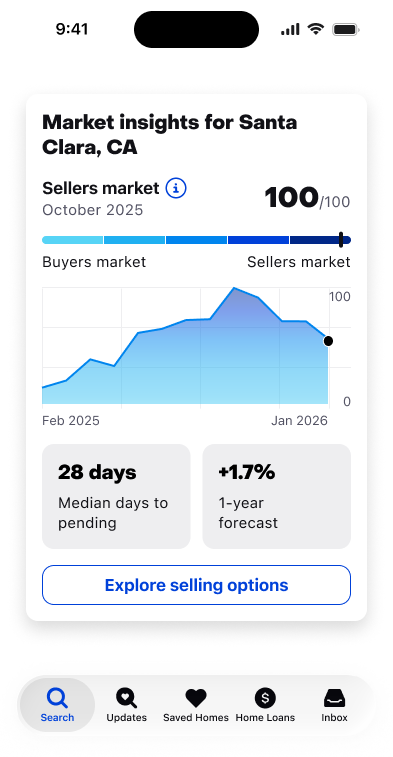
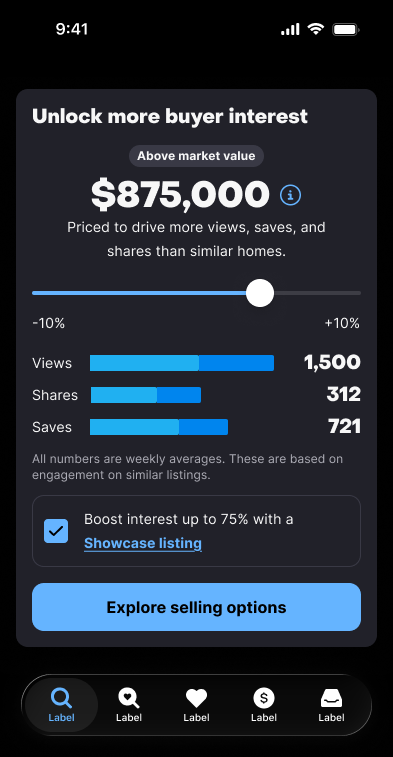
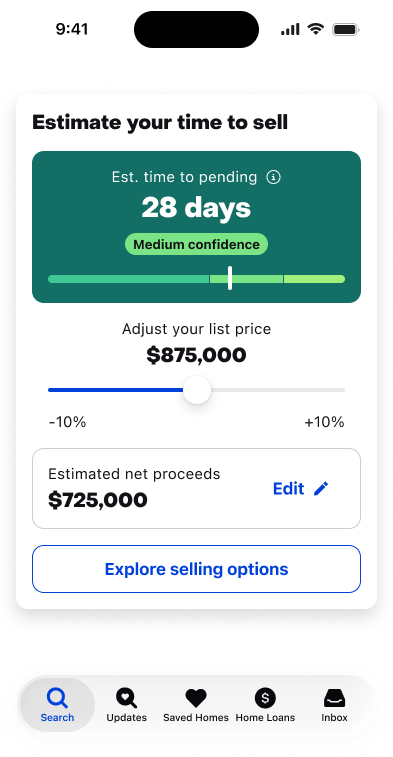
I shipped two tools. Market Insights answers whether this is the right moment; Demand Discovery answers what a given price would mean for time-to-sell and net outcome.
Market Insights V2
Demand Discovery V2
Why it looks like this
Both tools went through an earlier iteration built on the data available at the time. The goal was to test whether sellers would engage with a tool like this at all, then use that signal, plus better data, to answer the real questions: should I sell now or wait, and how long will it take?
V1 tested the water with existing data, to see if sellers would engage with such a tool
We knew sellers wanted to understand the market, and these were the four data points our data could support. We did not know which one mattered most, so the plan was to A/B test and follow up with qualitative research.
The only data available at the time was the engagement a seller could expect at a given list price, which is what the design models. Sellers could also see the boost in engagement they would get with the Showcase product.
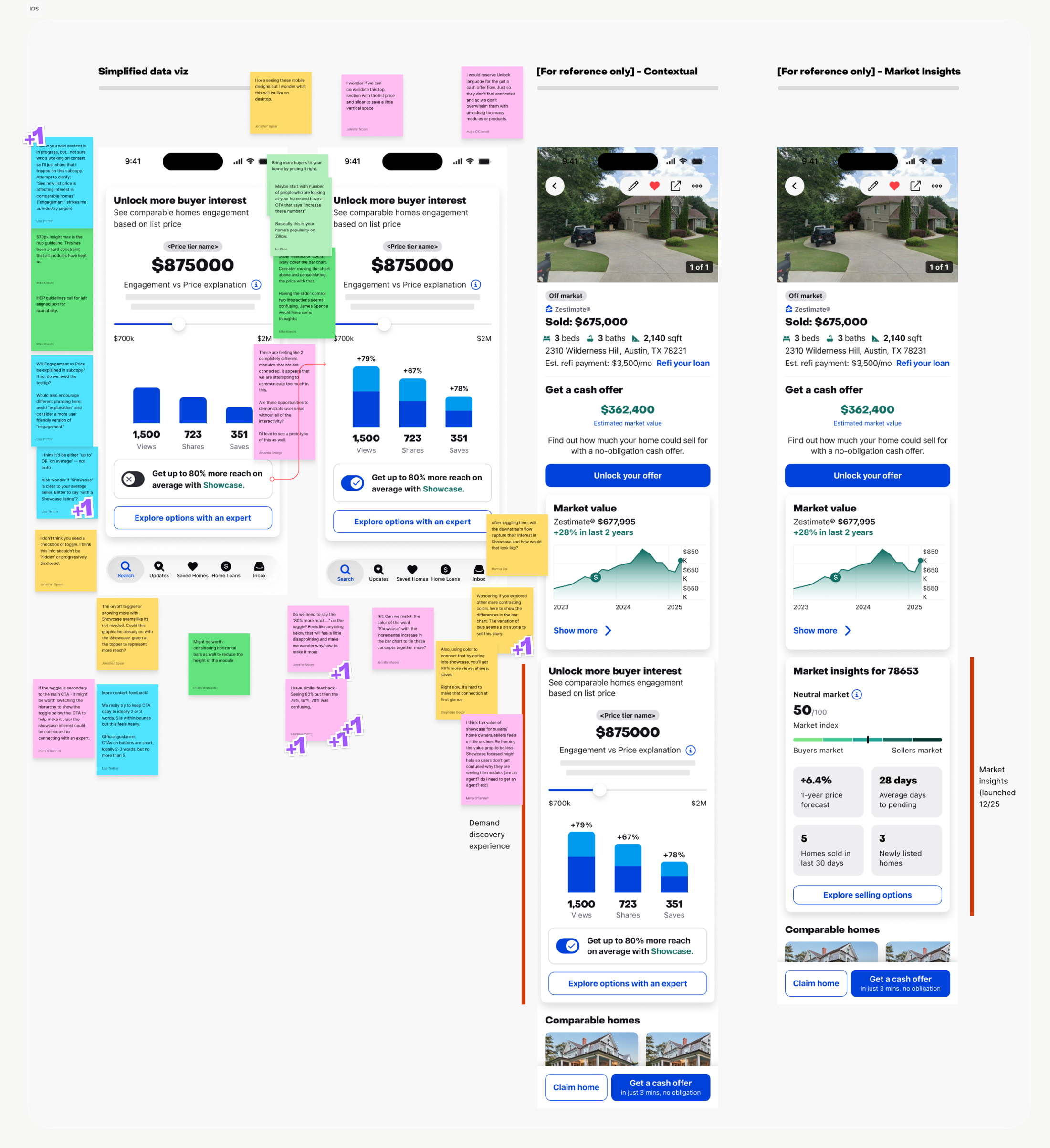
We learned in production, not in a user study
This was measured on live traffic. V1 of Market Insights was successful. Demand Discovery, on the other hand, showed strong engagement but did not move the conversion needle.
A/B tests told us what moved and what didn’t, but they couldn’t tell us why, so V2 was a hypothesis about the why, tested the same way.
Better demand data meant we could finally answer the question properly
The upgraded data let us model, in real time, what a given list price would likely get a seller, and show how much confidence Zillow had in that number.
The constraint that shaped V1 had lifted. That reframed the question from how to present a coarse signal well to what this should be now that we could actually answer it.
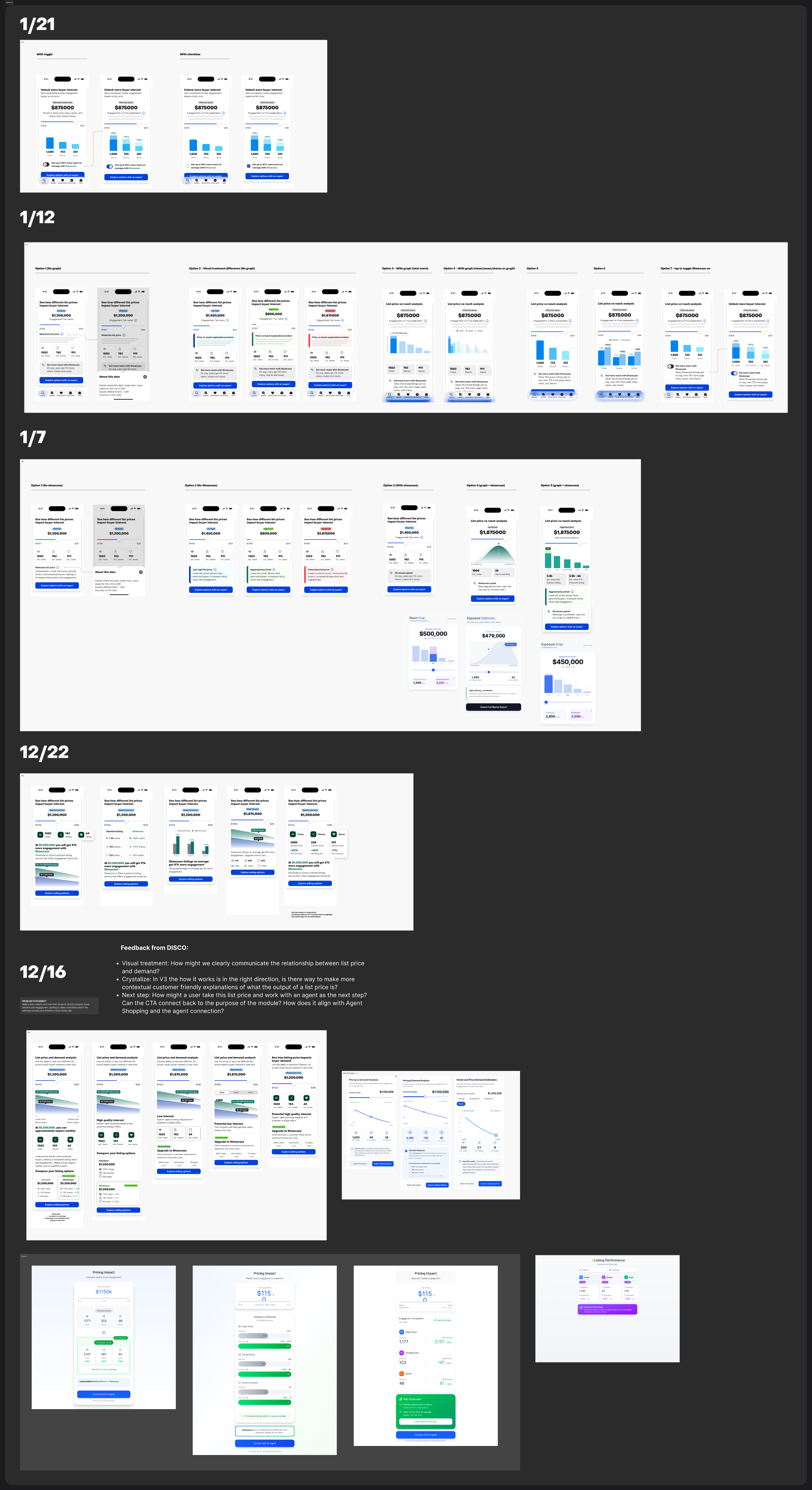
Everything I rejected for Demand Discovery V2
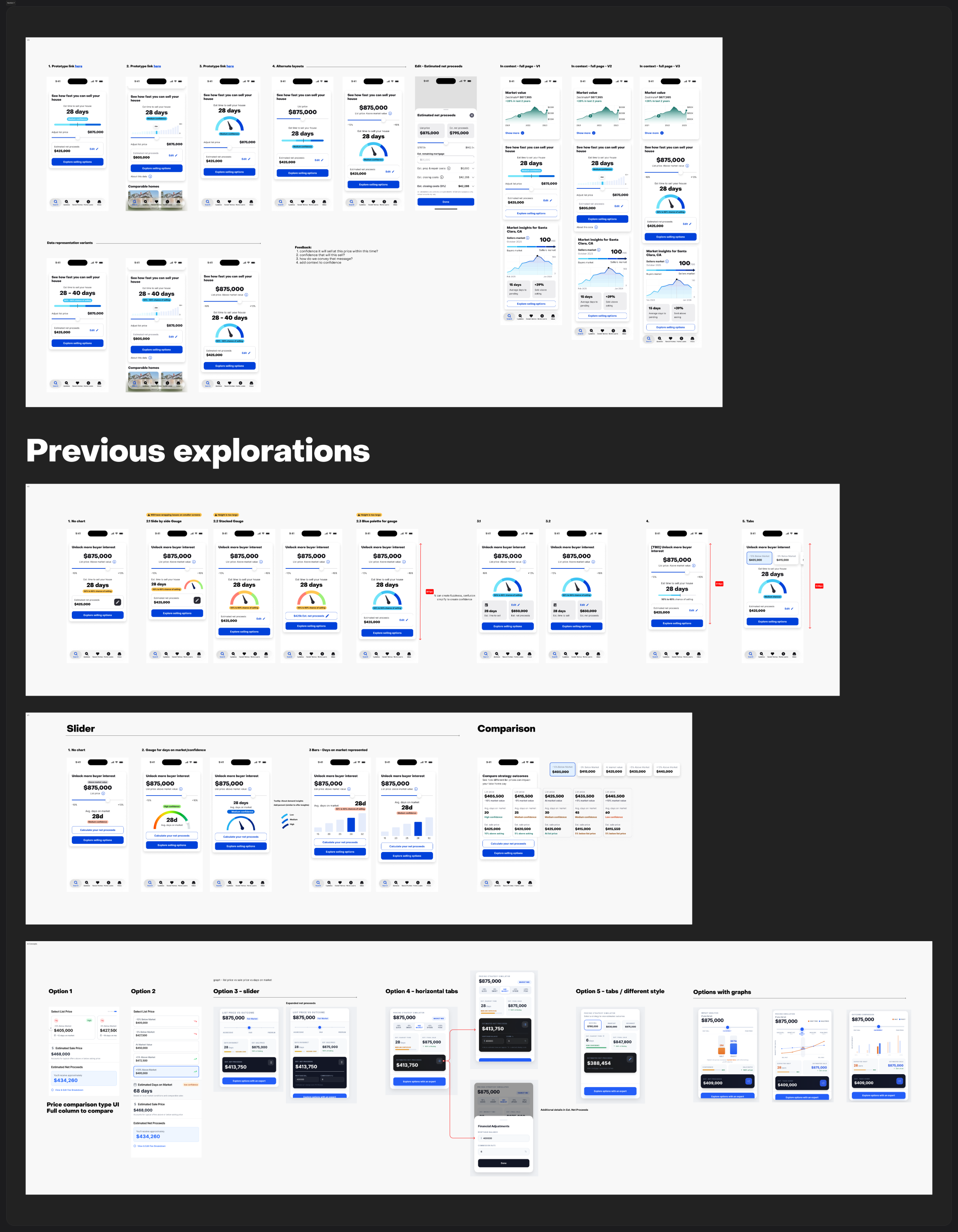
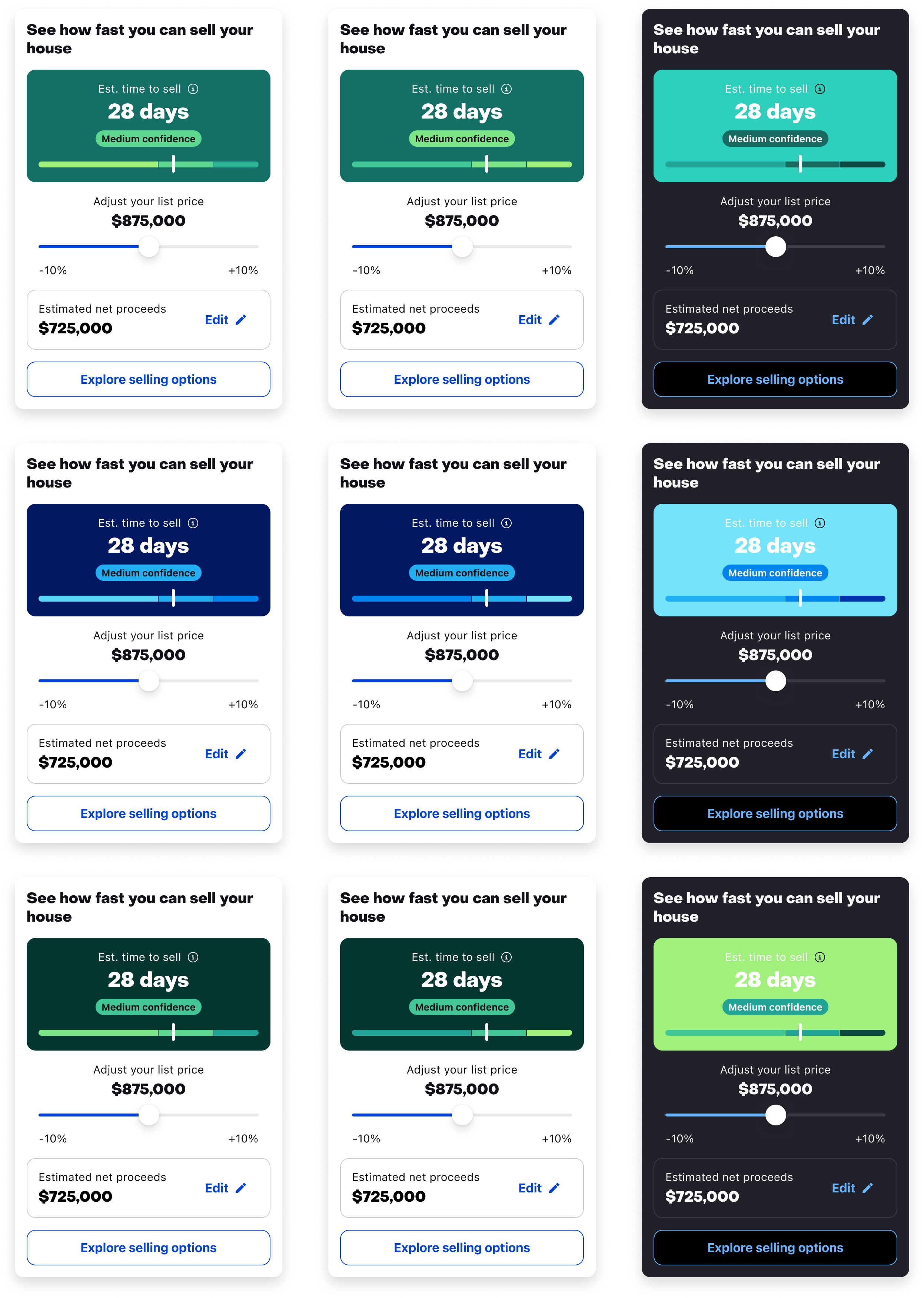
V1 → V2
What I would do differently
I would unify both tools into a single connected flow from day one to understand how users used the two tools together rather than in isolation. Launching them sequentially created a handoff gap between evaluating market timing and modeling price scenarios, which required a subsequent sprint to bridge.